Big Island · The park
Hawaiʻi Volcanoes National Park
Kīlauea, lava landscapes, and an island still building itself
Location
Hawaiʻi Island (Big Island)
Volcanoes
Kīlauea & Mauna Loa
Designation
UNESCO World Heritage Site
Scenic drives
Crater Rim & Chain of Craters
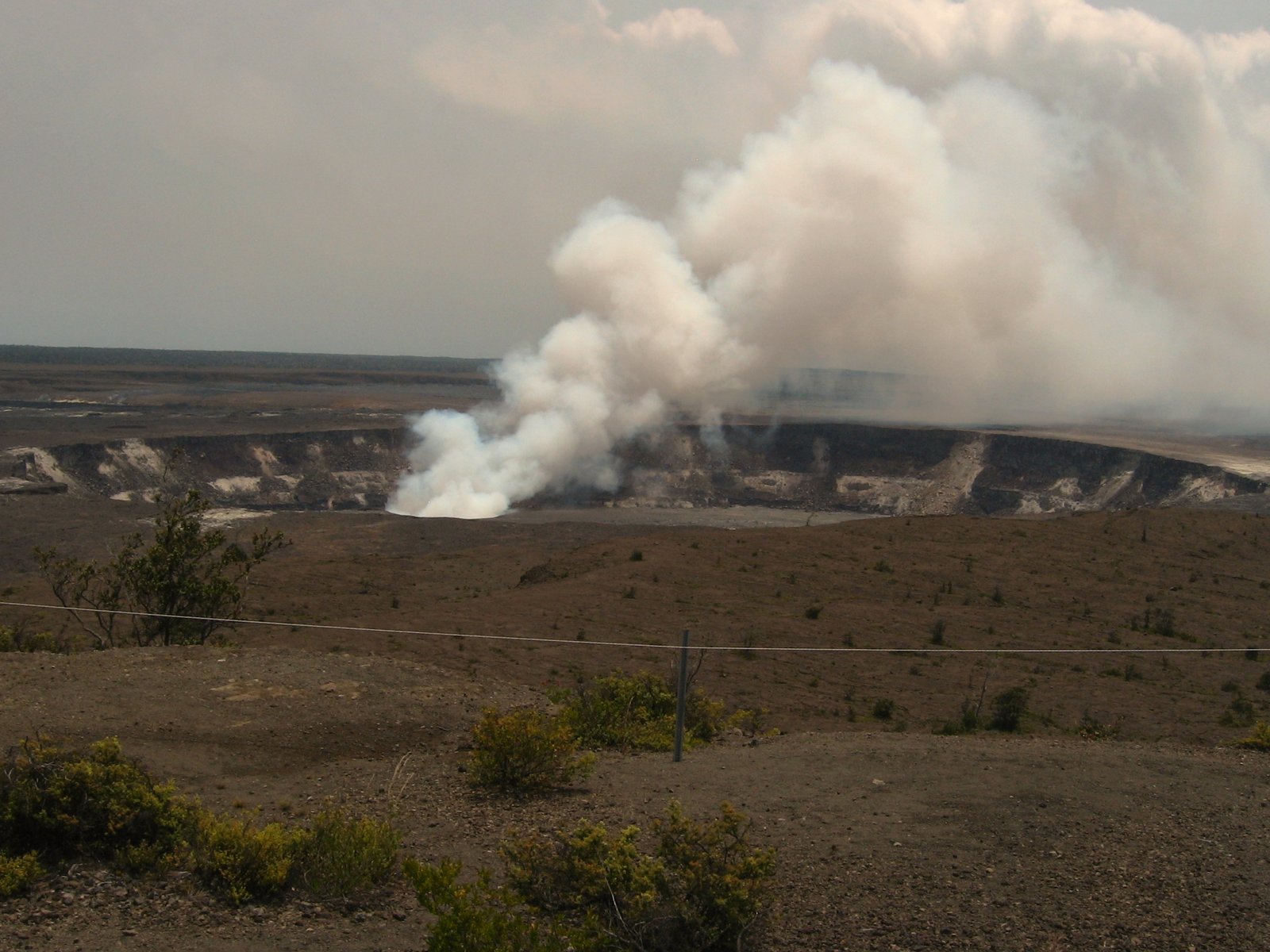
Hawaiʻi Volcanoes National Park lets you stand at the edge of one of Earth's most active volcanoes and watch the island still building itself. Crater Rim Drive circles Kīlauea's caldera; the Chain of Craters Road descends to the sea across old lava flows; and short trails carry you over hardened pāhoehoe and into lava-tube country. Kīlauea's eruptions come and go, so check current conditions before you go.
The experience
Hawaiʻi Volcanoes National Park lets you stand at the edge of one of Earth's most active volcanoes and watch the island still building itself. From the summit of Kīlauea, Crater Rim Drive circles the caldera past the vast Halemaʻumaʻu crater, steam vents where groundwater meets volcanic heat, and sweeping overlooks. Chain of Craters Road descends the volcano's flank all the way to the sea, crossing older lava flows and pit craters. Short trails and longer day hikes carry visitors across hardened pāhoehoe and ʻaʻā fields, through native rainforest, and into lava-tube country.
Volcanic and Big Island context
The park protects extraordinary terrain rising from sea level to nearly 13,700 feet, encompassing two of the world's most active volcanoes: Kīlauea and the massive shield of Mauna Loa. It is recognized as an International Biosphere Reserve and a UNESCO World Heritage Site, and it holds deep cultural significance in Hawaiian tradition as the home of Pele. Kīlauea is an active volcano, and its eruptions come and go on their own schedule — the summit may be quiet or dramatically active on any given visit, so check current conditions before you go rather than expecting lava. Even between eruptions, steam vents, sulfur banks, and miles of frozen flows make the volcanic story vivid.
How it fits a trip
The park anchors any Big Island itinerary and pairs naturally with a base near Hilo or the drive over from Kona and the Kohala Coast. Because features are spread along the summit and down Chain of Craters Road to the coast, most visitors devote at least a half to full day, combining a scenic drive with one or two short walks such as a lava tube or caldera overlook. Independent self-drive visits are easy, but guided operators add interpretation of the geology, ecology, and Hawaiian culture.
Local tip
Kīlauea's eruptions start and stop — check the NPS 'current conditions' page and the USGS Hawaiian Volcano Observatory before your trip, and bring layers: the summit area is cooler and wetter than the coast, with volcanic gas near active areas.
Book & reserve
Visiting: park & guided tours
Official sites and operators for this experience. AlohaCalendar doesn't sell tickets — book or reserve direct on their own sites.
Hawaiʻi Volcanoes National Park
National Park ServiceThe park protects some of the most unique geological, biological, and cultural landscapes in the world, encompassing two of Earth's most active volcanoes — an International Biosphere Reserve and UNESCO World Heritage Site.
Visit site ↗Hawaii Forest & Trail
Kailua-KonaA long-running Hawaiʻi Island adventure-tour company whose interpretive volcano tours guide travelers through Kīlauea and Hawaiʻi Volcanoes National Park.
Visit site ↗Run one of these outfits? Feature your business →
Book it
Tours & experiences
AlohaCalendar may earn a commission from bookings made through these partners — see our affiliate disclosure.
Things to Do in Hawaii
Tours, activities & unforgettable experiences
 $189+
$189+Kilauea Volcano & Stargazing
$189+Visit Hawaii Volcanoes National Park, see active lava flows, then stargaze at 6,500 feet.
 $99+
$99+Manta Ray Night Snorkel
$99+Swim with giant manta rays on the Kona Coast — one of Hawaii's most iconic experiences.
 $139+
$139+Big Island Waterfall Tour
$139+Visit three stunning waterfalls on the Hamakua Coast including Akaka Falls.
More things to do
Nearby on Hawaiʻi Island
For business owners
Run a Big Island tour or lodge?
Visitors planning a Big Island volcano trip look here for tours and rooms. Get an official AlohaCalendar listing so they find you first.
Photos: Ken Lund (CC BY-SA 2.0)
Never Miss a Thing
Get the best upcoming events across Hawaii delivered to your inbox. No spam, just good vibes.